
Guide two
Working Well
Doing a job well and feeling well while you do it are not opposites. Small habits around breaks, sleep and boundaries make long weeks easier.
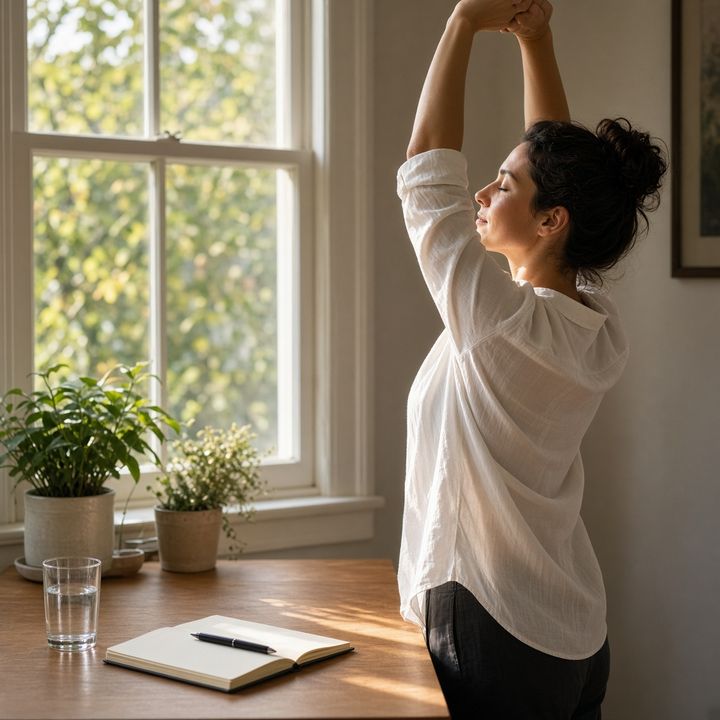
Take the break you are given
Skipping breaks feels productive and rarely is. Leave your workstation if you can, eat something proper and drink water. If you work alone, set a reminder so the break actually happens.
Screens and posture
- Look away often. Every so often, look at something far away for a few seconds to rest your eyes.
- Screen at eye level. Raise a laptop on a stand or a stack of books and use a separate keyboard if you can.
- Feet flat, shoulders down. Adjust the chair before you adjust yourself.
- Move every hour. Stand for calls, take the stairs, walk to ask a question instead of messaging.
Shift work and sleep
Night and rotating shifts are hard on the body clock. Keep a regular sleep window, make your room dark and quiet, and plan meals so you are not running on vending-machine snacks at 4 a.m. Tell family or housemates when you sleep, so they can help protect it.
Saying no politely
| Instead of | Try |
|---|---|
| “I can’t, sorry.” | “I can do that on Thursday. Does that work?” |
| “Fine, I’ll stay late again.” | “I have to leave at six. What should I finish first?” |
| “I’m too busy.” | “If I take this on, which task should I move?” |
When work feels too much
Everyone has heavy weeks. If stress lasts, affects your sleep or appetite, or makes you dread every day, talk to someone you trust, your manager or a doctor. Many workplaces offer confidential support lines, and there are free helplines in most countries.
This guide is general information about healthy habits at work. It is not medical advice. If you are unwell, please speak to a qualified health professional.